Over the past few years, Iran’s tile and ceramic exports have seen remarkable growth. Thanks to competitive prices, improved production technologies, and diverse designs, many Iranian manufacturers have successfully entered regional and European markets. But exporting is far more than producing a good product; it requires a precise understanding of international standards, packaging protocols, and export documentation. When these elements are handled correctly, the export process becomes far smoother and less risky.
This comprehensive guide brings together practical experience, industry knowledge, and international requirements to serve as a reliable guide to exporting tiles from Iran for businesses and exporters seeking professional insights.
Why Iranian Tiles and Ceramics Are Gaining Global Demand
Iran has significant advantages in tile production. Access to high-quality raw materials, capable workforce, and modern manufacturing technology gives local producers strong competitiveness. Meanwhile, markets such as Iraq, Oman, Russia, Georgia, Turkey, Qatar, Germany, and Eastern Europe consistently import ceramic products for residential and commercial use.
Three factors that play a major role in Iran’s export potential include:
- Competitive pricing compared to European and Turkish products
- Improved quality of modern porcelain and polished tiles
- Diverse designs that match different market tastes
However, successful entry into these markets requires a solid understanding of export standards and technical requirements.
Key Standards for Exporting Tiles and Ceramics
Different countries follow different regulations, but most importers—especially professional buyers—expect products to meet recognized international standards. Below are the essential technical and packaging standards required in most export destinations.
1. Product Quality Standards
Water Absorption Rate
Porcelain tiles must have a water absorption rate of below 0.5%, which is critical for European buyers. Wall tiles usually have higher absorption rates and are tested according to ISO 10545-3.
Abrasion Resistance (PEI Rating)
A crucial factor for floor tiles:
- PEI 1–2: Low-traffic residential areas
- PEI 3–4: Medium to high traffic areas
- PEI 5: Heavy commercial use
Some markets will not register or import tiles without a declared PEI rating.
Flexural Strength and Impact Resistance
Assessed under ISO 10545-4, this ensures the tile can withstand mechanical pressure. In many export shipments, inspection companies verify this before approving the cargo.
Calibration and Size Consistency
Even slight size deviation—especially in porcelain tiles—can lead to shipment rejection at the destination. Consistency is a core requirement.
2. Packaging and Labelling Standards
Although packaging may seem straightforward, over 40% of tile export damages occur because of improper packaging. For exports, packaging quality directly reflects the professionalism of the supplier.
Best Practices for Export Tile Packaging
- Use five-layer or seven-layer laminated cartons, especially for large formats such as 80×80 and above
- Ensure all printed information is clear and includes English or the language of the destination country
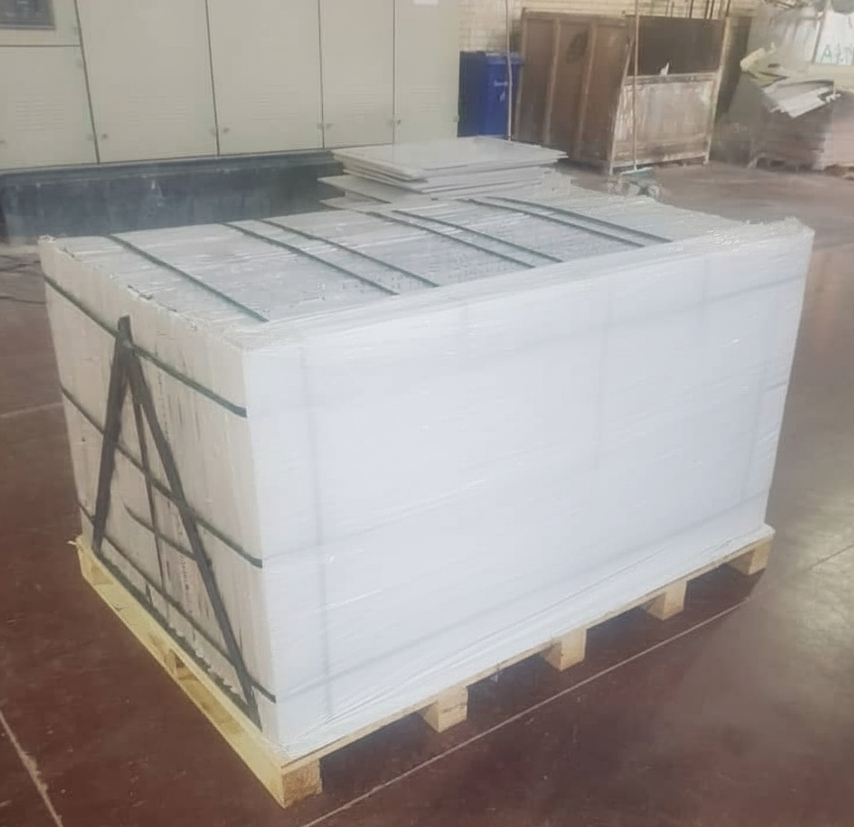
- Perform proper palletization using straps and full stretch wrapping
- Reinforce corners with protective angles
- Display the following information on every carton:
- Product name
- Exact size
- Quality grade
- Batch number
- Quantity per box
- Production date
- Country of origin (Made in Iran)
Important Note for European Markets
All wooden pallets must comply with ISPM 15 heat-treatment requirements. Non-compliant pallets are often destroyed or rejected at EU customs.
3. Container Loading and Securing
Proper loading inside the container is crucial. Even the highest-quality packaging cannot compensate for poor container arrangement.
Fundamental Rules for Container Loading
- Heaviest cartons should always be placed at the bottom.
- Use straps between layers.
- Fill empty gaps with foam or protective materials.
- Standard load limits:
- 20-ft container: approx. 21–23 tons
- 40-ft container: approx. 26–28 tons
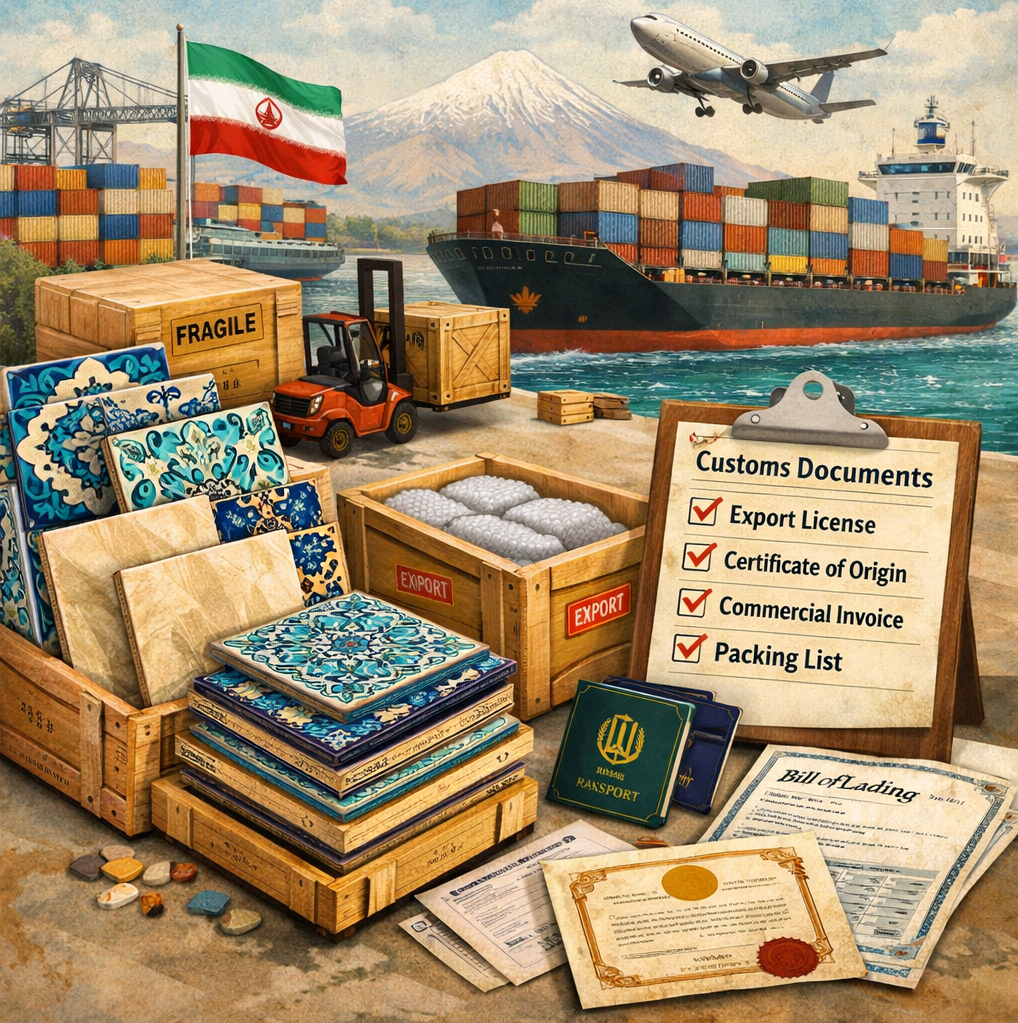
Required Documents for Exporting Tiles and Ceramics
Documentation requirements differ slightly across countries, but the following documents are standard in almost all export scenarios.
1. Proforma Invoice
This is the first official document exchanged between buyer and seller. It must clearly include:
- Total price
- Payment terms
- Product specifications
- Total weight
- Delivery terms (FOB, EXW, CFR, etc.)
2. Packing List
A detailed packing list is essential for customs clearance. It must include:
- Number of cartons
- Net and gross weight
- Total square meters
- Number of pallets
- Dimensions of pallets
- Product codes
3. Inspection Certificate (For Specific Markets)
Countries such as Iraq, Saudi Arabia, and several African markets often require inspection reports from organizations like SGS, Bureau Veritas, or Intertek.
4. Certificate of Origin
Issued by the Iranian Chamber of Commerce, this document is mandatory for international shipments.
5. Bill of Lading (B/L or CMR)
Depending on whether the shipment is by sea or land, the appropriate bill of lading is issued with all shipment details.
6. Commercial Invoice
The final invoice, issued after the shipment is confirmed, must accompany the export documents sent to the buyer.
Professional Tips for Successful Tile Exports
Below are some practical insights based on real export experiences in the tile industry:
1. Choosing the right factory matters more than getting the lowest price.
Reliable production schedules, consistent quality, and accurate sizing save you from costly disputes.
2. Always take samples from the actual production batch.
Some suppliers present special-quality samples that differ from the mass-produced batch. This can cause major issues with buyers.
3. For European buyers, invest in laboratory testing.
Authentic lab reports significantly increase buyer trust and help you enter high-value markets.
4. Secure your cargo with proper transport insurance.
The cost is minimal compared to the potential loss in case of damage.
5. Customize packaging based on the destination market.
Especially in Europe, professional packaging strongly influences purchasing decisions and brand perception.
Conclusion
Exporting tiles and ceramics from Iran presents a strong business opportunity, but only when handled with professional precision. Every step—from meeting technical standards to preparing export documentation—shapes the outcome of the transaction.
By understanding export standards, proper packaging, and required documentation, you set the foundation for long-term success in global tile markets. Whether you are just starting or scaling your export operations, approaching the process with a structured strategy and reliable suppliers will give you a strong competitive edge.